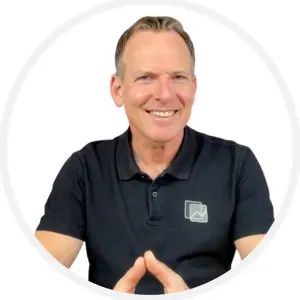
More than three decades at SAP. Leadership positions, large teams, global projects. And then: the step from manager to founder. What really happens in that situation, I recently described in a much-discussed article. LinkedIn post in English This article translates the key findings into German and contextualizes them. Because the difference between a manager and an entrepreneur is greater than many realize.
Why the corporation is a comfort zone that you often only realize when you leave it.
Within the company, many things run smoothly. Structures support you. Decisions follow processes. And if a project fails, the responsibility is shared among many.
Imagine going into a building someone else built every morning, using tools someone else paid for, and talking to clients someone else acquired. You're doing a good job. But the foundation is already there.
As a founder, you build this foundation yourself. Every single day.
I described this exact moment in my LinkedIn post: In a corporation, trust is built through the brand behind you. As a founder, you have to build it yourself, step by step. Every conversation, every customer reaction, and every decision directly impacts you. Not a department. You.
That's not a disadvantage. It's the core difference between a manager and an entrepreneur. You learn who you truly are as a decision-maker when there's no corporate name behind you anymore.
1) Trust is not an inheritance
In a large corporation, you carry the brand's reputation. That opens doors before you even have to say much yourself. As a founder, it's different. Trust doesn't automatically come with the territory. You have to build it yourself.
People want to understand who you are, what you do, and why it's relevant. This doesn't happen through a big corporate brand in the background, but through many individual interactions. Through conversations. Through clear communication. Through reliability.
This difference in particular has significantly changed my perspective on brand value. In a corporation, you benefit from existing trust. As a founder, you quickly realize how much work it takes to earn that trust yourself.
2) You no longer manage handovers, you live with the consequences.
One of the most important lessons I learned from my experience as a founder is how directly interconnected things suddenly become. Within a large corporation, there are also dependencies between product, communication, price, and customer reaction. But you often don't feel them with the same immediacy.
As a founder, yes.
A product decision influences communication.
A price change affects the conversion rate.
A support case affects trust.
With TransparentShare, I experienced exactly that very directly. Every decision regarding price, features, or communication quickly shows its effects. No filter. No buffer.
It's intense. Sometimes painful, too. But that's precisely where the great learning effect lies. You develop a much deeper understanding of how a company really works. Not in individual departments, but as an interconnected system.
Customer feedback is one of the most important management tools. Not theory. Not abstract market research. But real reactions from real people. If you're willing to learn from it, you'll improve faster.
3) A strong product is not enough if nobody can find it.
That was one of the biggest learning curves for me. For a long time, my instinct was strongly product-driven: make it more useful, make it simpler, make it better. That's important. But it's only half the job.
A strong product alone is not enough. You need customers. And revenue.
If no money is coming in, you can't just keep building, no matter how good your product is. Especially when you're investing your own money, marketing suddenly feels completely different. You think much more carefully about what actually generates revenue and what only produces visibility that doesn't convert.
In a corporation, revenue is often a key performance indicator presented in a presentation. As a founder, it's what will pay your bills tomorrow. This shift in perspective changes how you think about decisions.
When you transition from a corporate environment to self-employment, you often bring in-depth expertise. That's valuable. But expertise alone doesn't sell anything. You need to relearn, or at least consciously cultivate, the ability to identify customer needs, communicate them clearly, and generate revenue from them.
My many years of experience with human-centered innovation and design thinking have been invaluable in this process. This focus on genuine needs is incredibly valuable if you want to understand what customers truly require and how to develop solutions that actually work in everyday life.
That, for me, is the core of my founder's story with TransparentShare: not experience lost, but perspective changed.
Conclusion: Not a fresh start, but a real change of perspective.
The path from manager to founder is not a step backwards or a start from scratch. But it does force you to see things differently. Trust. Responsibility. Revenue. Customer understanding. Impact.
My years at SAP have given me a lot, and I'm incredibly grateful for that. TransparentShare has also given me a new perspective on that very experience. Some things can be transferred directly. Others need to be adapted. And you only learn many things when you're fully responsible yourself.
You can find the full original post in English with all reactions and comments directly on LinkedIn. If you would like to read more such insights and findings, Feel free to follow me on LinkedIn.
More information about TransparentShare
If you'd like to learn more about my founder's story and the origins of TransparentShare, you can find further insights here:
The origin story of TransparentShare
If you want to learn more about our mission, our values, and the team behind TransparentShare, you can find all the information here:
About us at TransparentShare